
- Crude flows through the Strait of Hormuz reached a seven day average of 14.2 MBpd on 26 Sep’26, nearly 80% of pre-war levels, as Gulf producers resumed transit. Despite the recovery, record tanker rates, higher insurance costs and vessel shortages continue to constrain effective crude availability and logistics.
- Middle East crude exports recovered to above pre-war levels, reaching 19.5–22.5 MBpd on several days in the final week of Sep’26, with the seven day average rising to 18.5 MBpd on 1st Oct’26 versus 18 MBpd pre-war.
- Saudi Arabia faced renewed attacks on its energy infrastructure, with Yemen’s Iran backed Houthis claiming missile and drone strikes on Saudi Aramco facilities in Riyadh and the Khurais area on 5th Oct’26.
- From 28th Sep’26 onward,at least seven tanker incidents were reported around the Strait of Hormuz , including the 1st Oct’26 projectile strike on the 2 mln bbl Kuwaiti crude carrier Kazimah III, keeping regional crude flows and shipping exposed to elevated security risks.
- Iraq transported around 2 mln bbl of crude through the Strait of Hormuz on 3rd Oct’26, marking the first such operation by the country’s state owned Oil Tanker Company in decades. The shipment provides Iraq’s state oil marketer SOMO with greater flexibility in crude sales and demonstrates that Iraqi barrels can still transit the Strait despite ongoing shipping disruptions.
- OPEC+ agreed to keep its Nov’26 oil production targets unchanged at its 4th Oct’26 meeting, with output from the seven core members rising by 0.63 MBpd MoM to around 25 MBpd in Aug’26 but remaining roughly 5 MBpd below the Feb’26 pre war level. Meanwhile, around 2 MBpd of production cuts remain in place, while Gulf producers continue to operate below their quotas due to export disruptions.
- G7 countries agreed to release 100 mln bbl of crude and diesel from emergency reserves over four months, with a substantial portion of the diesel volumes expected to be released within the first 20 days, while G7 members also committed to avoiding energy export restrictions.
- Vietnam’s Nghi Son refinery has secured sufficient crude supplies to operate at around 125% of its 0.2 MBpd design capacity through Nov’26, with about 75% of its new crude cargoes sourced from Kuwait. The refinery has diversified its feedstock to 10 crude types following earlier supply disruptions and has been operating above nameplate capacity since Jul’26 to meet strong domestic and regional fuel demand.
- Chinese refiners have suspended oil product exports beyond Hong Kong and Macau until further notice, while PetroChina cancelled several Oct’26 gasoline and jet fuel cargoes to prioritize domestic fuel availability, this move could reduce refinery runs and crude demand if restrictions persist, while tightening refined product supplies across Asian markets.
- India’s Middle Eastern crude imports rose to 11.3 mln tons in Sep’26, the highest since Feb’26, improving crude availability for its 5.6 MBpd refining system and enabling Indian refiners to potentially increase refined product exports to fill part of the supply gap created by restricted Chinese fuel exports.
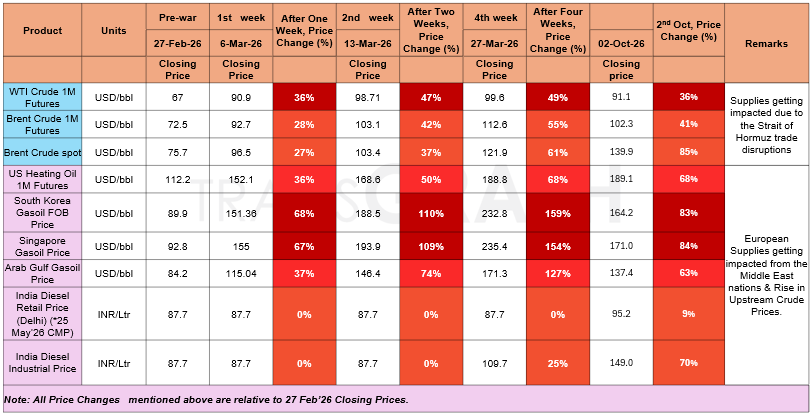
War Impact on Crude Oil & Gasoil/Diesel Prices
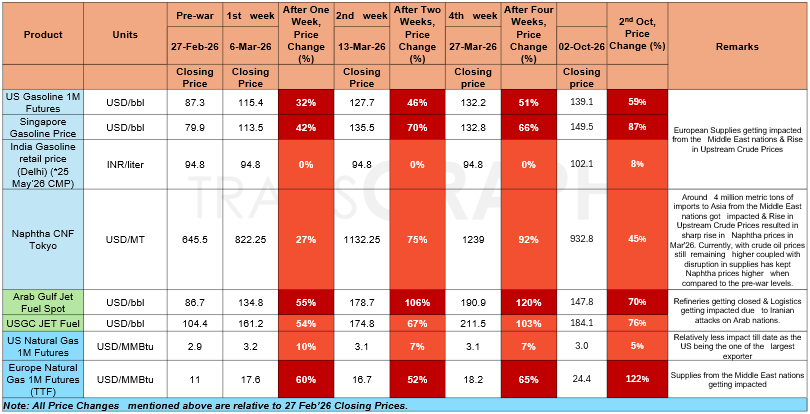
War Impact on Gasoline, ATF & Natural Gas Prices
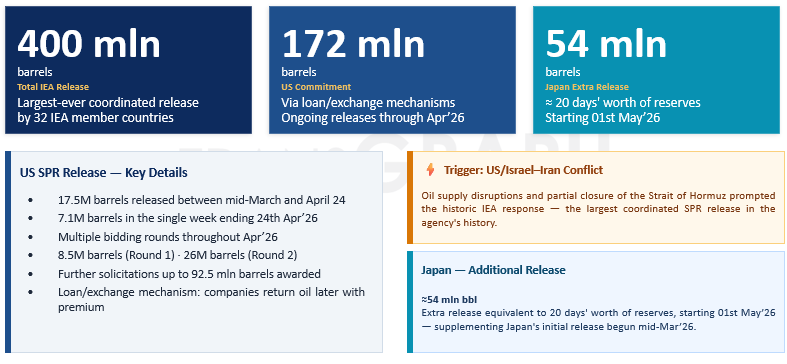
GCC Bypass Pipelines Running Near Capacity — But Shah Gas Field Ablaze and Fujairah Zone Struck
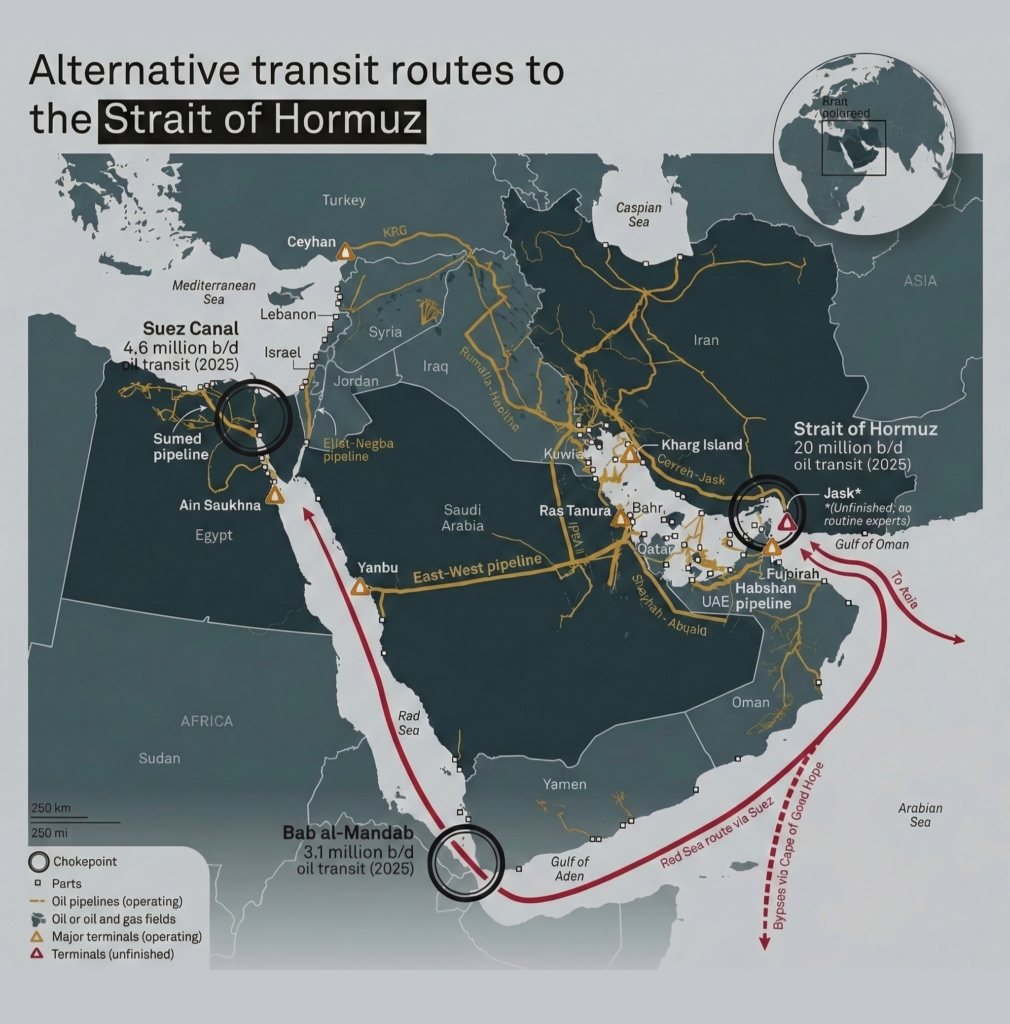
- Saudi Arabia's East-West pipeline is pumping oil at its full capacity of 7 MBpd, bypassing the Strait of Hormuz. Crude oil exports from Yanbu port have reached 5 MBpd, and the country is also exporting 0.70 to 0.90 MBpd of oil products.
- Of approximately 15 MBpd of crude transiting the Strait of Hormuz in OND'25, combined SPR releases and bypass pipeline capacity can offset roughly two-thirds — or slightly more — for the next 20 to 30 days, providing the Trump administration a window to assess strategic direction.
- New strikes directly threaten this buffer — Iranian drones struck the UAE's Shah gas field (currently ablaze) and the Fujairah Oil Industry Zone on Mar 17. A tanker was also hit near the Strait of Hormuz. Saudi Arabia intercepted over a dozen drones; Kuwait and Bahrain sustained additional attacks. These represent the first direct strikes on GCC energy export infrastructure since the conflict began.
War Scenarios Point to Global Supply Deficit of 0.92–1.07 MBpd in 2026 and AMJ Quarter Most Severe with a deficit of 4.10 MBpd.
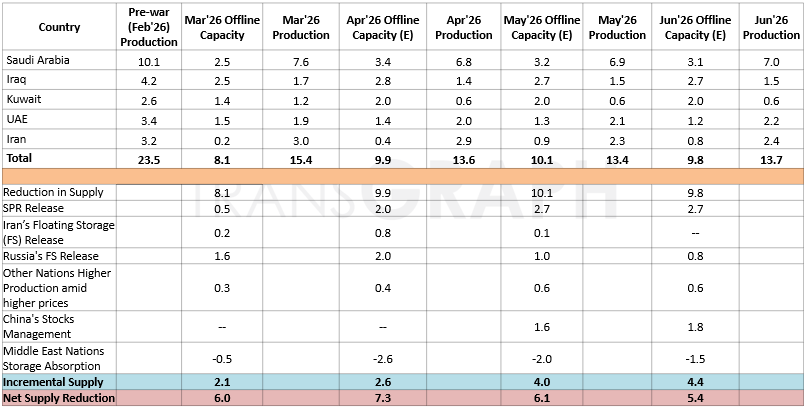
Pre-war, global supply and demand were near-balanced with a modest surplus of +0.55 MBpd projected for 2026. Both conflict scenarios introduce significant supply deficits driven by Strait of Hormuz disruptions and impacts on Iraq and Kuwait crude production.
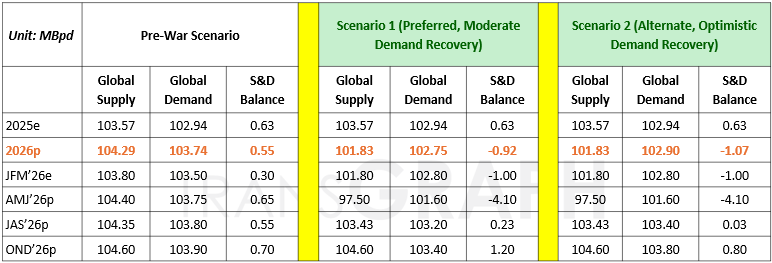
- Scenario 1 (Preferred): Ceasefire talks continue to progress positively, with tanker flows through the Strait of Hormuz gradually normalizing over the next 4–5 weeks. Supply recovers steadily, while demand improves at a slower pace and remains below pre-war expectations, resulting in a moderate market surplus.
- Scenario 2 (Alternate): The Strait of Hormuz normalizes over the next 4–5 weeks, supporting a gradual recovery in oil exports and supply. Demand rebounds more strongly than in Scenario 1, reducing the market surplus, although overall consumption remains below pre-war levels.
Geopolitical backdrop:

War Front: President Trump has indicated that US has rejected the latest peace deal. Fears of fresh attacks have risen amid breakdown in negotiations weighing on base metals. US President Donald Trump has rejected a news report claiming his administration offered Iran sanctions relief and access to frozen funds, calling the story a hoax on social media. Iranian Foreign Minister Abbas Araghchi says Tehran has held further indirect talks with the United States through Qatari mediators in New York, with Washington’s formal response expected by Tuesday.
The United States and China have agreed to reduce tariffs on $30 billion of goods and launch a dialogue on AI, both countries said following President Xi Jinping's visit to Washington. The tariff reductions would apply to US exports such as agricultural goods, wood and cosmetics, as well as US imports including small appliances, toys, decorations, a White House statement said on Friday.
Recently New York Fed President John Williams said there was “no urgency” to raise rates again. This reduced expectations of an immediate/October Fed hike: Saudi Arabia restarted flows through its East-West pipeline after repairs following drone attacks. September crude exports from Middle Eastern producers reached about 16.3 million barrels/day. The US offered to loan up to 40 million barrels from its Strategic Petroleum Reserve. This adds another potential source of crude supply and therefore put downward pressure on prices. These factors eased near-term supply concerns, reducing inflation pressure.
Steel:
- Steel supply chains remain largely insulated from the Middle East conflict.
- Moreover, HRC prices are up by 3.2% on a monthly basis due to raw material price surge and stronger demand from auto sector.
Base metals:
- LME 3M copper are down 2.6% on a weekly basis as mid autumn festival slowed China consumption. Further, rejection of peace deal by US and stronger dollar is weighing on metals. However, backwardation structure, reduced rate hike expectations, and supply disruptions will provide some support.
- Aluminum prices are down 4.4% due to gradual recovery from GCC and stronger dollar despite tensions in the middle east.
Precious metals:
- Stronger U.S. yields and weak industrial offtake are suppressing any upside momentum.
- Stronger US Dollar and geopolitical tensions are weighing on precious metal prices.
LPG Market Update
- For August 2026, Saudi Aramco Contract Prices (CPs) rebounded to USD 620/ton for propane and USD 640/ton for butane, compared with USD 580/ton and USD 600/ton, respectively, in July. This represents a 6.9% month-on-month increase in propane CPs and a 6.7% month-on-month increase in butane CPs.
- Sonatrach raised its August propane OSP by 4.2% m-o-m, from $518/ton to $540/ton, while the butane OSP was cut by 5.0%, from $600/ton to $570/ton.
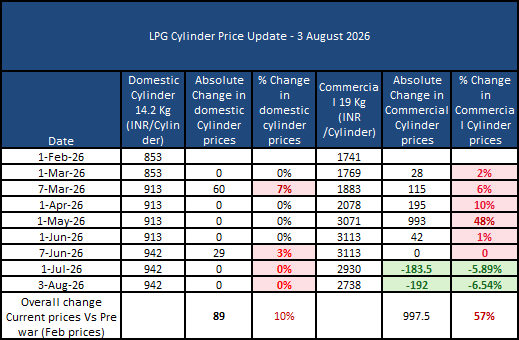
- India’s commercial LPG prices eased further in August, with the 19 kg cylinder price in New Delhi declining by ₹192, from ₹2,930 in July to ₹2,738 as of 3 August 2026. Despite the recent correction, commercial LPG remains substantially above its pre-war level of ₹1,741/cylinder. In contrast, the 14.2 kg domestic LPG cylinder remained unchanged at ₹942, reflecting continued price stability for household consumers.