
- Pakistan, backed by China, is exploring the resumption of stalled US-Iran peace talks amid escalating Middle East tensions, although progress remains challenging as continued Houthi attacks, the near-closure of the Strait of Hormuz, and disruptions in the Red Sea have heightened geopolitical risks, with Islamabad emphasizing that a halt to attacks on Saudi Arabia and other Gulf states is a prerequisite for renewed negotiations.
- Ship traffic through the Bab el-Mandeb Strait fell to 11 commodity vessels on 26th Jul'26, the lowest level in months, including 7 oil tankers, after Houthi attacks on Saudi oil facilities intensified concerns over Red Sea shipping, driving physical crude prices in the Middle East, Europe, and Africa to two-month highs.
- Meanwhile, transit through the Strait of Hormuz remained subdued, with 7 vessels on 26th Jul'26, 3 vessels on 25th Jul'26 (all with transponders switched off), and 7 vessels on 24th Jul'26, reflecting continued caution over disruptions to key global oil trade routes.
- Iran-aligned Houthi rebels attacked two Saudi oil tankers in the Red Sea, raising fears of disruptions to the Bab el-Mandeb and Strait of Hormuz, while U.S.-Iran tensions escalated with continued airstrikes, missile exchanges, and threats of further military action.
- As the conflict widened across the Middle East, shipping costs increased, oil exports were disrupted, and concerns grew over inflation, global economic stability, and mounting political pressure on the Trump administration despite congressional efforts to limit US military involvement.
- Tanker traffic through the Strait of Hormuz fell to just one outbound vessel and zero inbound vessels on 23rd Jul'26 (down from three crossings the previous day), while 32 tankers transited the Bab el-Mandeb Strait (up from 26), highlighting significant shipping disruptions that have driven oil prices back to around 100 USD/bbl and prompted rerouting of cargoes via the Suez Canal.
- Chinese refiners have increased purchases of Russian ESPO crude despite narrower discounts (1–3 USD/bbl vs. 4 USD/bbl previously) and resumed negotiations for Iranian crude (Pars at 8 USD/bbl discount and Iran Light at 3–4 USD/bbl discount to ICE Brent) as Middle East supply disruptions and shipping risks intensified amid the Iran conflict.
- China's crude oil imports plunged 41.3% YoY to 7.12 MBpd in Jun'26, the lowest since Oct'16, while refinery throughput fell 17.7% to 12.47 MBpd, reflecting weaker demand and reliance on stockpiles during the Iran conflict.
- Although China drew about 0.94 MBpd from inventories in Jun'26 and still added around 0.53 MBpd to reserves in the first half of the year, it may increase refinery runs and fuel exports as Asian refining margins have widened.
- The EU sanctioned Georgia's Kulevi refinery in its 21st sanctions package for processing Russian crude, imposing a transaction ban effective in six months, despite the refinery's commitment to stop refining Russian oil by Aug'26–Sep'26 after processing over 650,000 metric tons in the first half of 2026 and exporting products worth 811 mln Euro to the EU and US between Feb'23 and Feb'26.
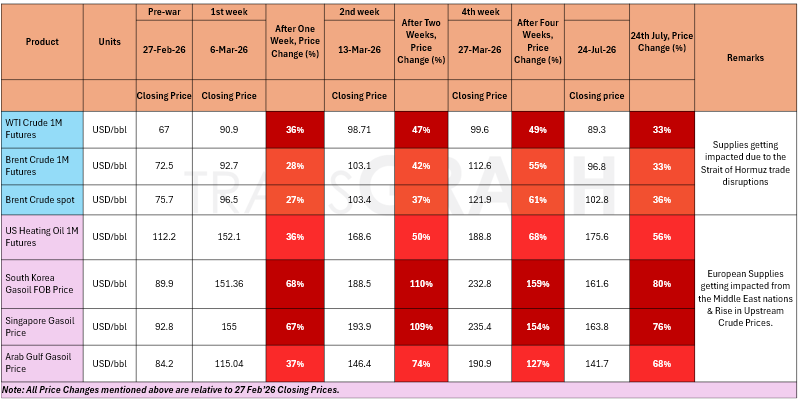
War Impact on Crude Oil & Gasoil/Diesel Prices
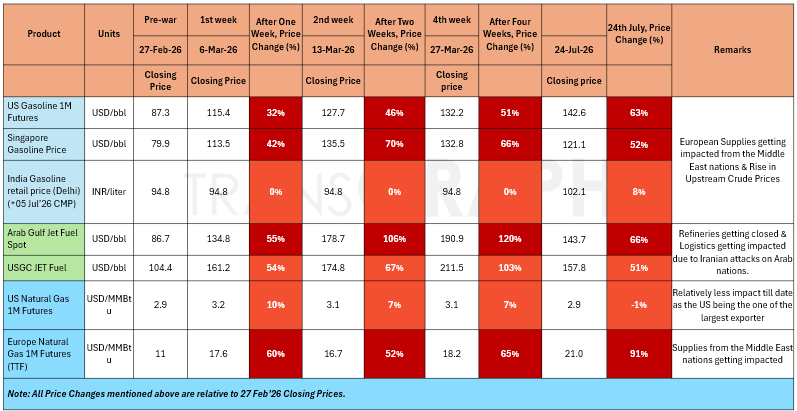
War Impact on Gasoline, ATF & Natural Gas Prices
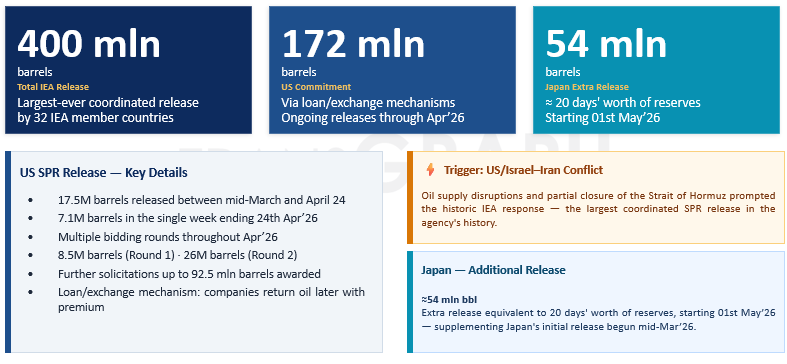
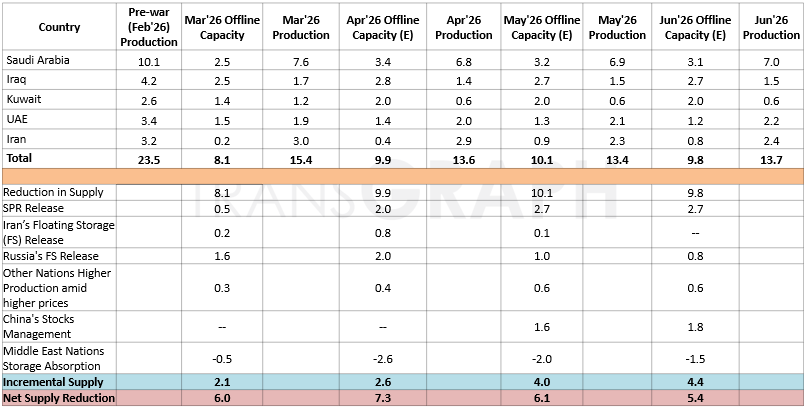
GCC Bypass Pipelines Running Near Capacity — But Shah Gas Field Ablaze and Fujairah Zone Struck
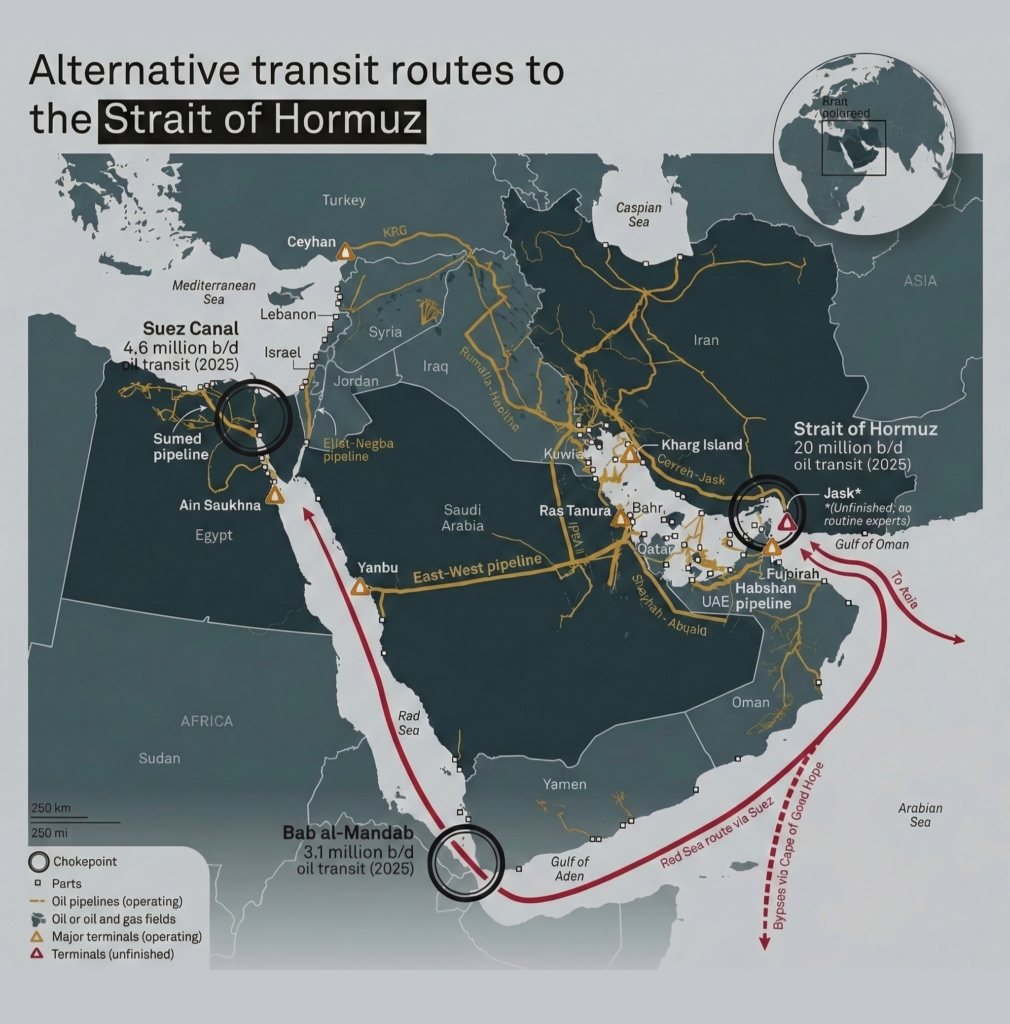
- Saudi Arabia's East-West pipeline is pumping oil at its full capacity of 7 MBpd, bypassing the Strait of Hormuz. Crude oil exports from Yanbu port have reached 5 MBpd, and the country is also exporting 0.70 to 0.90 MBpd of oil products.
- Of approximately 15 MBpd of crude transiting the Strait of Hormuz in OND'25, combined SPR releases and bypass pipeline capacity can offset roughly two-thirds — or slightly more — for the next 20 to 30 days, providing the Trump administration a window to assess strategic direction.
- New strikes directly threaten this buffer — Iranian drones struck the UAE's Shah gas field (currently ablaze) and the Fujairah Oil Industry Zone on Mar 17. A tanker was also hit near the Strait of Hormuz. Saudi Arabia intercepted over a dozen drones; Kuwait and Bahrain sustained additional attacks. These represent the first direct strikes on GCC energy export infrastructure since the conflict began.
War Scenarios Point to Global Supply Deficit of 0.92–1.07 MBpd in 2026 and AMJ Quarter Most Severe with a deficit of 4.10 MBpd.
Pre-war, global supply and demand were near-balanced with a modest surplus of +0.55 MBpd projected for 2026. Both conflict scenarios introduce significant supply deficits driven by Strait of Hormuz disruptions and impacts on Iraq and Kuwait crude production.
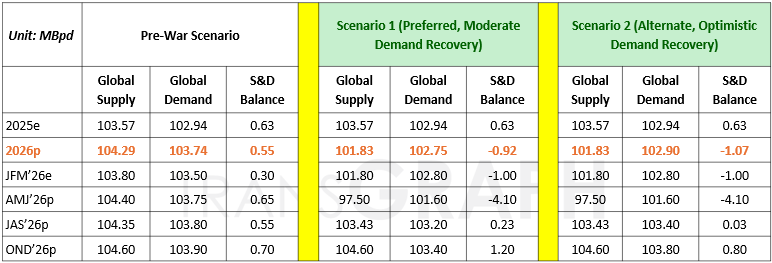
- Scenario 1 (Preferred): Ceasefire talks continue to progress positively, with tanker flows through the Strait of Hormuz gradually normalizing over the next 4–5 weeks. Supply recovers steadily, while demand improves at a slower pace and remains below pre-war expectations, resulting in a moderate market surplus.
- Scenario 2 (Alternate): The Strait of Hormuz normalizes over the next 4–5 weeks, supporting a gradual recovery in oil exports and supply. Demand rebounds more strongly than in Scenario 1, reducing the market surplus, although overall consumption remains below pre-war levels.
Geopolitical backdrop:

The United States paused its airstrike campaign against Iran after 13 consecutive nights of attacks, while Iran announced it would also halt retaliatory strikes as long as Washington maintains the pause, reaffirming its "attack-for-attack" policy. According to U.S. officials, President Donald Trump temporarily suspended the bombing campaign to create space for diplomacy after military advisers warned that most pre-selected targets had been exhausted and prolonged operations could further deplete U.S. munitions.
Despite the temporary lull, Iranian officials remain sceptical, viewing the pause as a tactical move rather than a genuine shift in U.S. policy. The de-escalation has eased immediate concerns over disruptions to the Strait of Hormuz, reducing the geopolitical risk premium in crude oil prices. However, markets are expected to remain cautious as the situation remains fragile and any renewed military action could quickly reignite volatility in energy and financial markets.
Steel:
- Domestic steel prices have moderated from recent highs.
- Steel supply chains remain largely insulated from the Middle East conflict.
- Since, the start of war steel HRC prices are up by 7.4%.
Base metals:
- Copper prices are up 1.8% on a weekly basis, as China copper premium rises to 13 month high and inflation pressures ease with softer CPI and weaker job data despite persistent geopolitical conflicts. Prices receive continued support from CME-LME arbitrage, backwardation structure, exchange inventory outflows, and persistent mine supply constraints which offset pressure from renewed tensions, hawkish Fed outlook, and elevated global inventories.
- Renewed tensions and weaker US CPI release is supporting aluminum prices. Prices are up 0.7% on a weekly basis.
Precious metals:
- Stronger U.S. yields and weak industrial offtake, especially auto are suppressing any upside momentum.
- Stronger US Dollar due to anticipation of rate hike in US is weighing on precious metal prices.
LPG Market Update
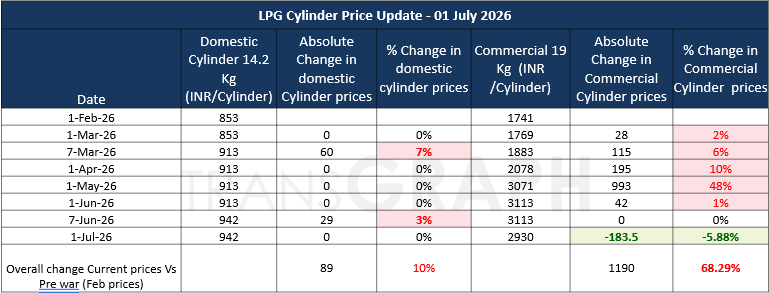
- As of 1 July 2026, India has reduced the price of the 19 kg commercial LPG cylinder by INR 183.5 per cylinder, lowering it from INR 3,113 to INR 2,930. The reduction reflects the recent easing in international LPG prices and freight rates following the de-escalation of geopolitical tensions in the Middle East, which has improved global supply conditions and reduced import costs.
- In response to the improving supply outlook, the Government has also begun rolling back several emergency measures implemented during the recent LPG supply disruption. Supplies of non-domestic packed LPG have been fully restored, while bulk LPG allocations to commercial and industrial consumers have been increased to 50% of pre-crisis consumption levels. These measures are expected to provide significant relief to LPG-dependent sectors, including manufacturing industries, hotels, restaurants, catering services, and other commercial establishments, while supporting a gradual normalization of the domestic LPG market.